
- Electrode Process
-
The electrode process involves applying the active materials of the cathode and anode onto their respective current collectors,
aluminum and copper foils, and cutting them to the specified dimensions.

- DRY COATER
- ROLL PRESS
- SLITTER
- ELECTRODE SUPPLY UNIT
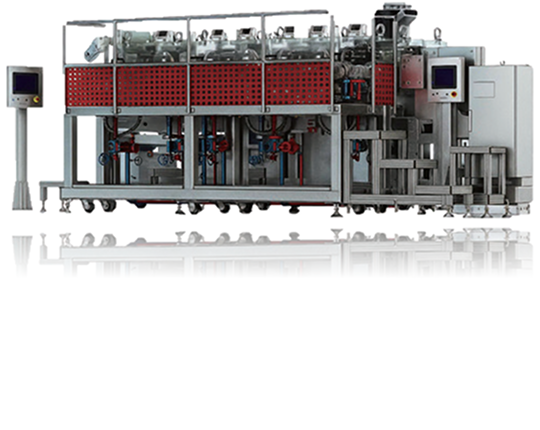
DRY COATER
This equipment applies dry powder coating to electrodes
without using solvents.
The simplified process improves production efficiency,
enables thinner electrode layers than conventional wet processes,
facilitates manufacturing, and increases energy density.
-

50m/min
Machine Speed
-

Ø400
Roll Diameter
-

300mm
Web width
-

150℃
Roller Temp.
-

Multi Roll & Both sides
Coating Method
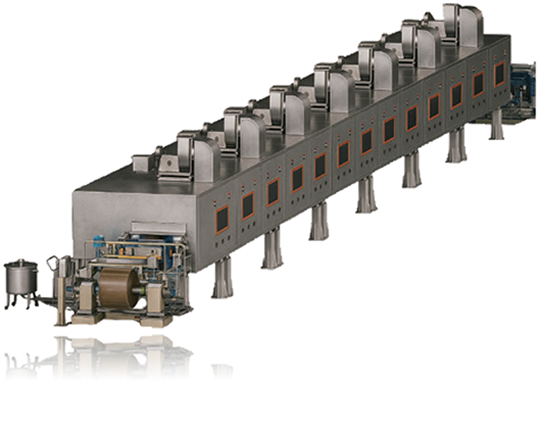
COMPACT COATER
(NIR DRY)
This equipment uniformly applies electrode slurry to the current collector
to produce the electrode.
Near-infrared (NIR) drying enables rapid drying, high energy efficiency,
precise control, consistent product quality, and reduced installation space.
-
100m/min
Machine Speed
-
Ø900
Roll Diameter
-
1,400mm
Web width
-

NIR Lamp
Heating Method
-

Slot die & Mono pump
Coating Method
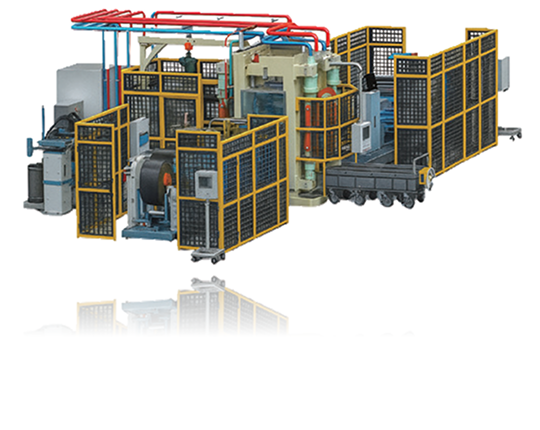
ROLL PRESS
This equipment passes coated electrode sheets through rollers
to compress them to a uniform thickness and density.
High-precision rollers minimize thickness variation,
while automatic thickness measurement and fine roller-gap adjustment ensure consistent quality.
-
100m/min
Machine Speed
-
Ø900
Roll Diameter
-
650mm
Web width
-
150±1℃
Dryer Temp.
-

6.4ton/cm
Pressure
-
Multi, Cold & Hot
Pressing Method
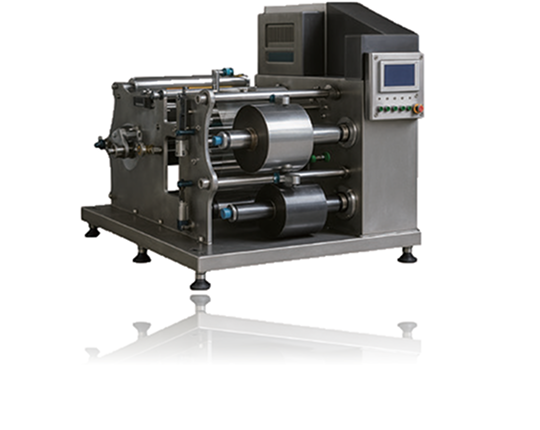
SLITTER
This equipment precisely cuts coated and pressed electrodes
to the required battery cell dimensions.
High-precision rollers minimize thickness variation,
while automatic thickness measurement and fine roller-gap adjustment ensure consistent quality.
-
120m/min
Machine Speed
-
Ø900
Roll Diameter
-
650mm
Web width
-

Block Knife
Slitting Method
-

±0.1mm
Precision
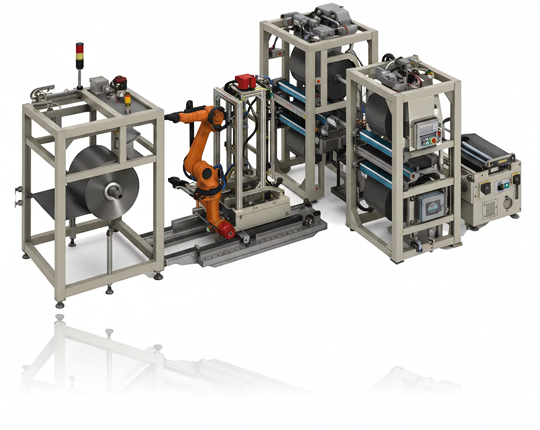
ELECTRODE SUPPLY UNIT
This equipment automatically supplies reel-type electrodes to the
unwinders of notching, cutting, and other equipment,
and performs automatic electrode splicing.
Its space-saving vertical winding design supports heavy electrode handling,
while a multi-joint robot and vision system enable
flexible and precise automatic electrode splicing.
-

Full Automatic
Supply·Splicing·Ejection
-

Time saving
Minimizing splicing time
-

Detectable
Polarity, Direction
-

Space saving
Minimizing space